 TÜRKÇE
 ENGLISH

This report presents the findings obtained within the scope of the “Department of International Trade and Logistics Internship Evaluation Survey” and the general evaluations based on these findings. The survey was designed to determine the satisfaction levels of our Department’s students regarding the internships they completed as part of their applied education process and to assess the contribution of internship practices to the curriculum. Conducted within the framework of the Department’s Quality Assurance System, this study evaluates the effect of the experiences gained by students during their internships on their professional development, as well as their satisfaction with the host organizations. The survey results will provide a basis for efforts aimed at improving the quality of internship practices, preparing students more effectively for sectoral expectations, and continuously enhancing educational activities. The survey consists of two main sections. The first section includes students’ evaluations of their own internship experiences. The second section assesses students’ satisfaction with the organizations where they completed their internships.
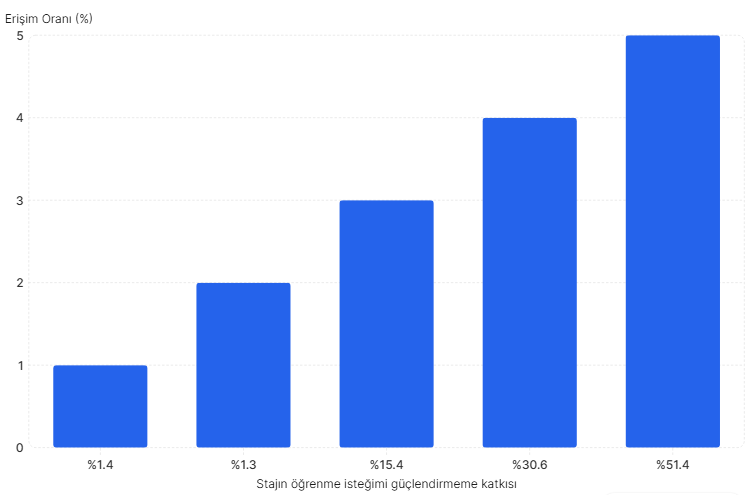
The contribution of the internship to students’ ability to determine their own goals and objectives was evaluated. Based on data obtained from 70 participants, the average score was found to be 4.29. This indicates that a significant proportion of students believe that the internship process made a meaningful contribution to clarifying their professional goals and objectives. In particular, the high number of students who gave a score of 5 suggests that internships provide a guiding and awareness-enhancing experience. A small number of students who gave lower scores stated that the internship process did not sufficiently help them set goals.
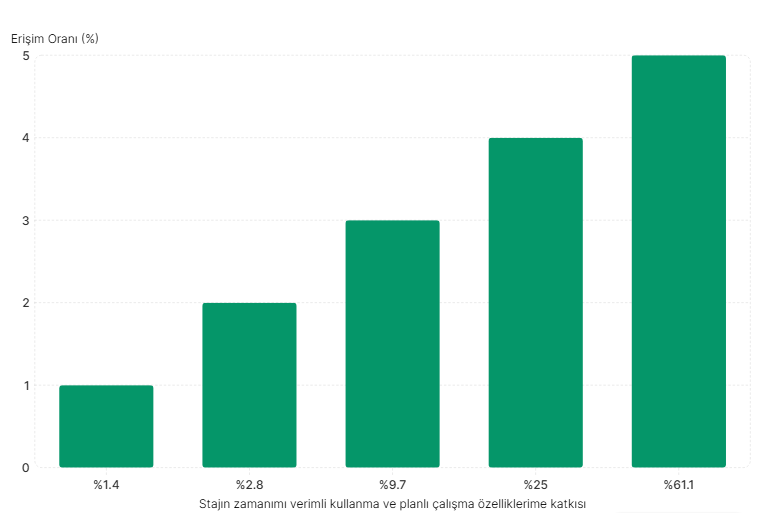
The contribution of the internship to students’ time management and planned working skills was examined. Based on data from 70 participants, the average score was 4.42. It was observed that a large majority of students believed that the internship improved their time management and planned working habits. This shows that the internship process provided students with valuable experience regarding workplace discipline.
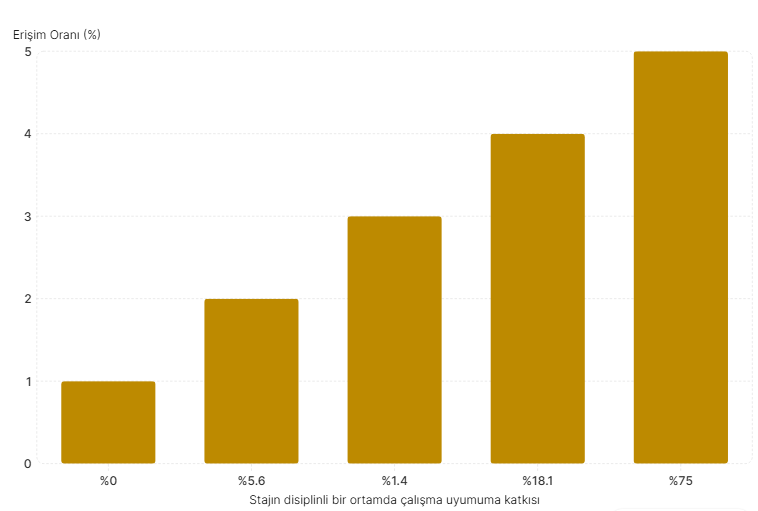
Students were asked about the contribution of the internship to their ability to adapt to a disciplined work environment. Based on data from 70 students, the average score was 4.63. This result indicates that the internship process positively affected students’ ability to comply with workplace rules, develop regular working habits, and adapt to processes requiring discipline. The internship experience made an important contribution to preparing students for professional life by strengthening their understanding of professional discipline.
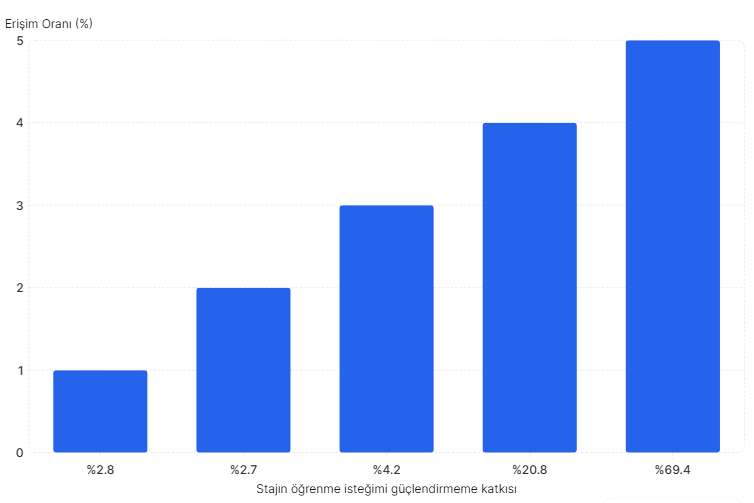
When the contribution of the internship to strengthening students’ willingness to learn was examined, the average score based on data from 70 students was found to be 4.51. This result shows that when students gain direct experience in the workplace and see the real-life applications of what they have learned, they become more open to learning. By raising awareness during the process of applying theoretical knowledge in practice, the internship contributed to increasing students’ interest in professional subjects.
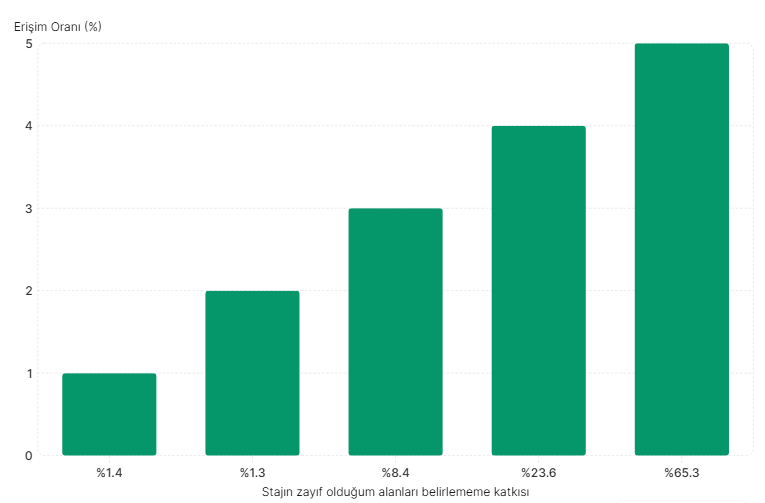
The contribution of the internship to helping students identify their areas of weakness was evaluated. Based on data from 70 students, the average score was calculated as 4.50. This result shows that students had the opportunity to discover their shortcomings during the internship process and that this awareness contributed to their development. It is understood that students who assumed real duties and responsibilities in the internship environment were able to see more clearly the areas in which they needed to improve.
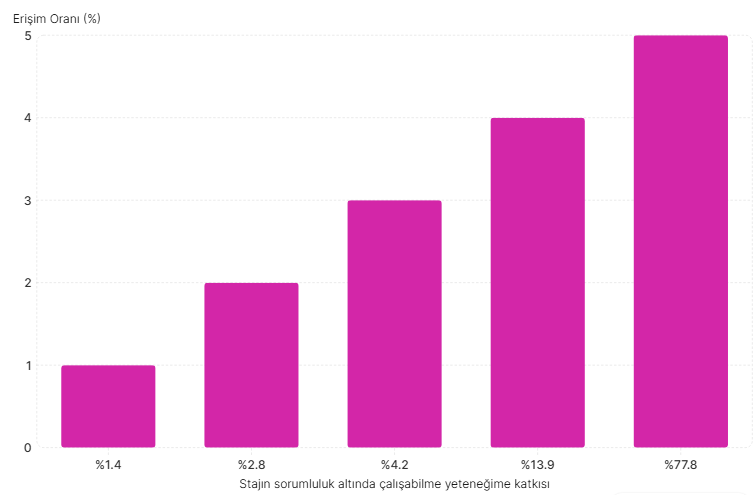
The contribution of the internship to students’ ability to work under responsibility was evaluated. Based on data from 70 students, the average score was 4.64. This result clearly demonstrates that students developed their sense of responsibility by undertaking active duties and responsibilities throughout the internship process.
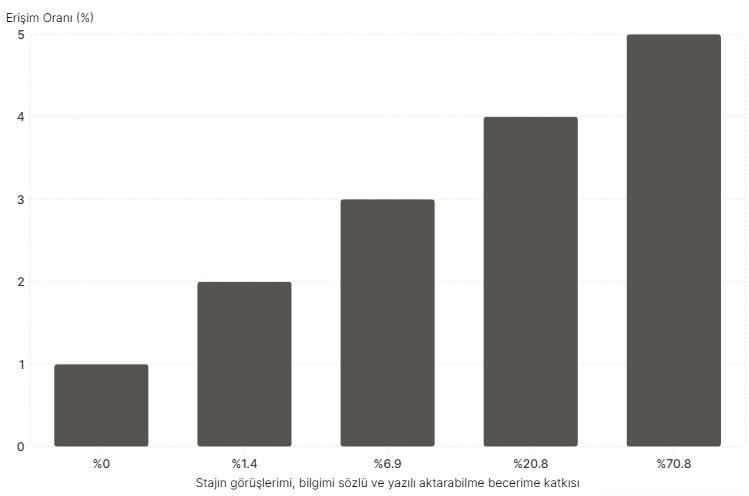
Students were asked about the contribution of the internship to their ability to communicate their opinions and knowledge verbally and in writing. Based on data from 70 participants, the average score was 4.61. The results show that the internship made a significant contribution to helping most students express their ideas clearly and effectively, communicate appropriately in the workplace, and provide professional feedback.
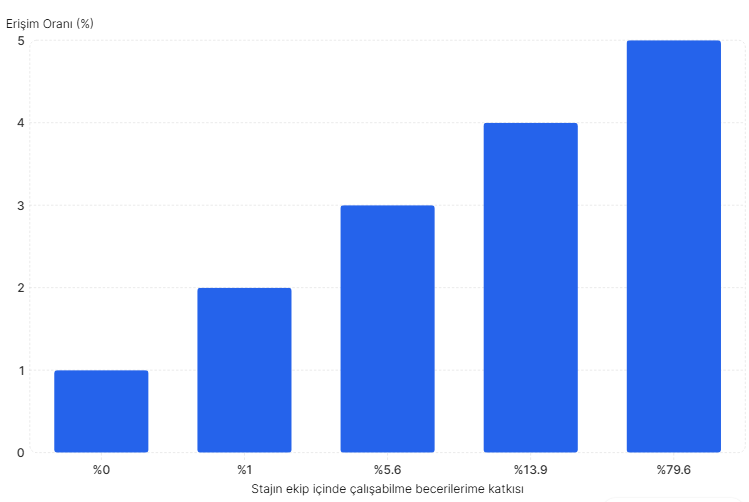
Students were asked about the contribution of the internship to their teamwork skills. Based on data from 70 participants, the average score was 4.75. This indicates that students made important gains in areas such as collaboration, team communication, task sharing, and taking responsibility. These results confirm the importance of teamwork in professional life and the potential of internships to provide students with real experience in this area.
Based on students’ open-ended responses, the main theme that emerged in the “Other Thoughts and Opinions” section was the insufficient duration of the internship. The majority of participants emphasized that the 20-day internship period was inadequate both for understanding workplace culture and for developing professional skills.
The second section of the survey focused on students’ satisfaction levels and experiences regarding the organizations where they completed their internships. In this section, students were asked 15 questions. Thirteen questions were answered in a “Yes–No” format, while two questions were rated on a scale from 1 (Very Poor) to 5 (Very Good).
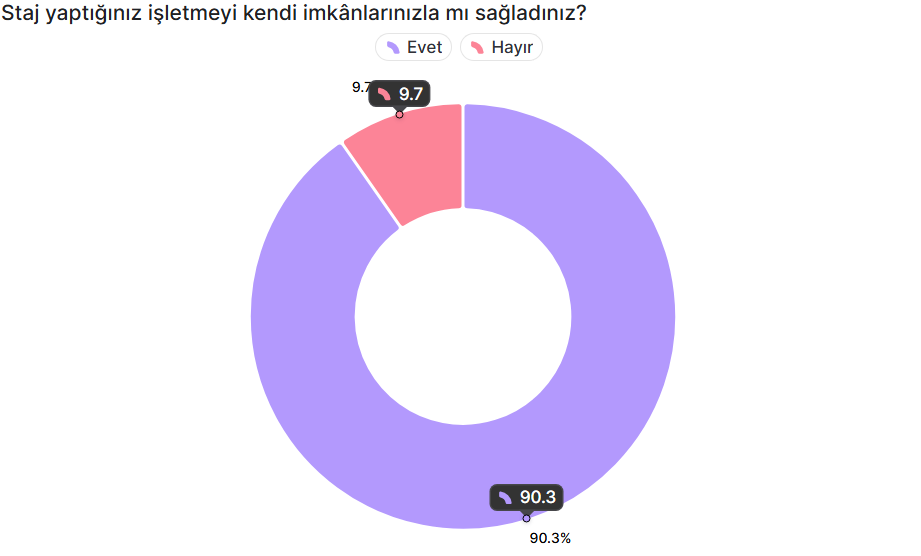
The majority of students participating in the survey (90.3%) stated that they found their internship placement through their own means. However, 9.7% of the students reported that they obtained their internship placement through other means, such as the National Internship Programme or personal references.
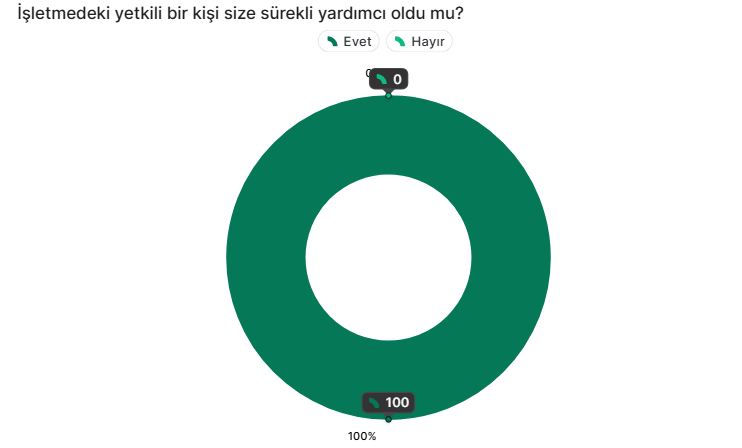
All students participating in the survey stated that an authorized person at the organization continuously assisted them. This result shows that students received guidance, support, and direction throughout the internship process and that the organizations adopted an approach that valued student development.
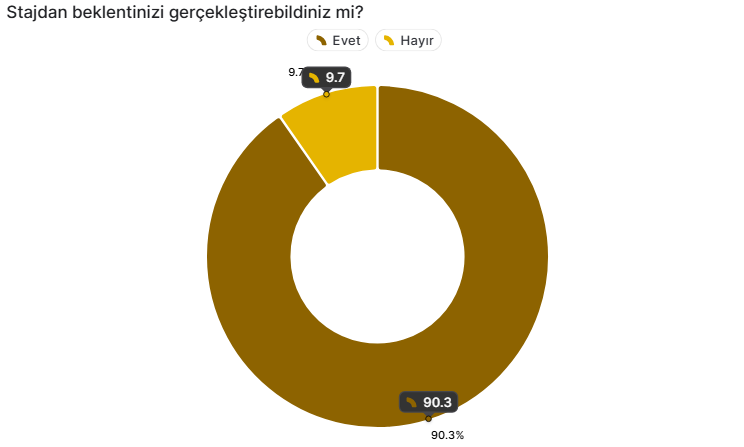
The majority of students participating in the survey (90.3%) stated that they were able to meet their expectations from the internship. This positive result indicates that internships contributed to students’ professional development and helped them achieve their personal goals. However, 9.7% of the students stated that their expectations were not met.
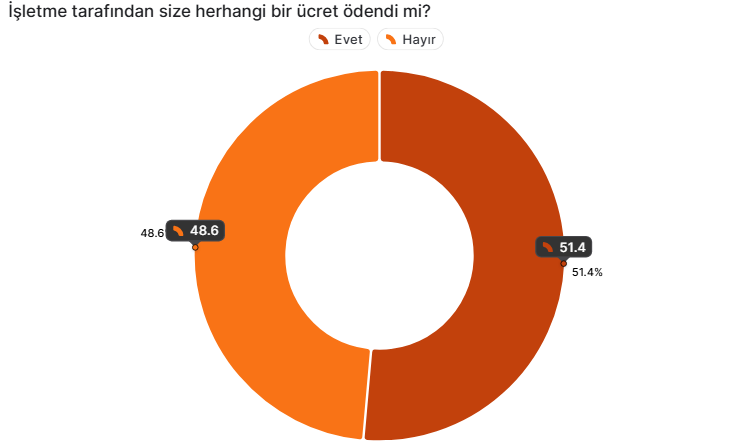
Approximately 51.4% of the students participating in the survey stated that they did not receive any payment from the organization where they completed their internship, while 48.6% reported that they did receive payment.
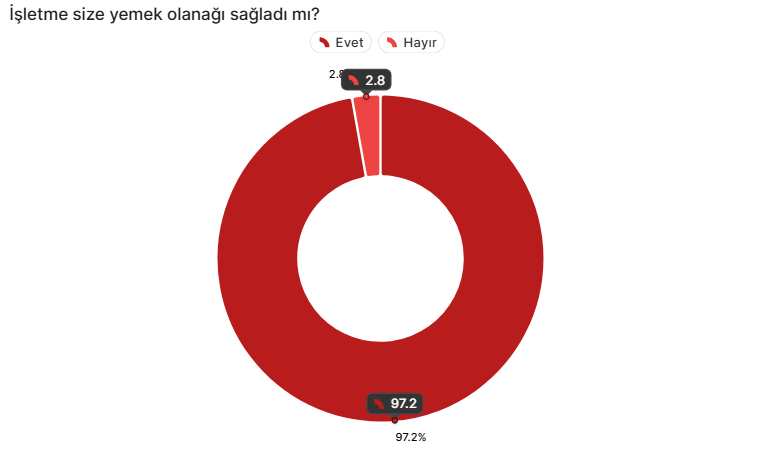
The majority of students participating in the survey (97.2%) stated that meals were provided by the organization where they completed their internship. This high rate presents a positive picture in terms of the social and physical support offered to interns. Only a very small proportion of students (2.8%) stated that meals were not provided.
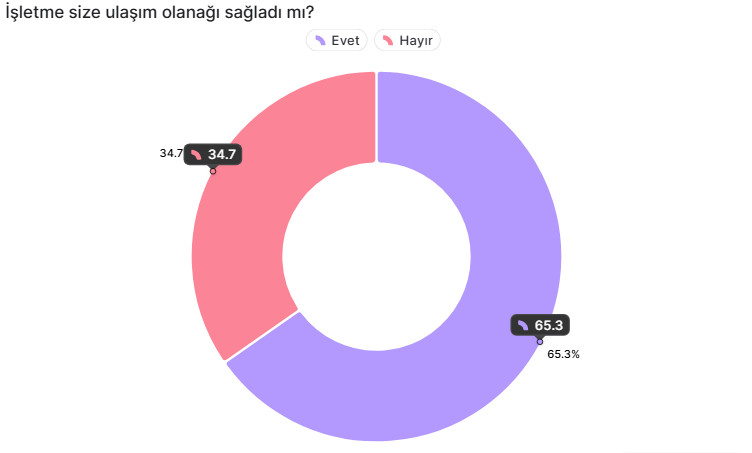
Approximately 65.3% of the students participating in the survey stated that the organization where they completed their internship provided transportation. On the other hand, 34.7% reported that they did not receive transportation support.
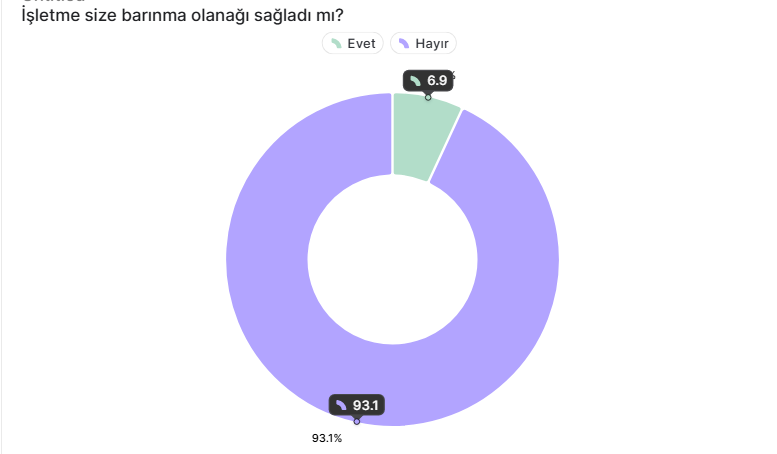
A total of 93.1% of the students participating in the survey stated that the organization where they completed their internship did not provide accommodation. The remaining 6.9% received accommodation support.
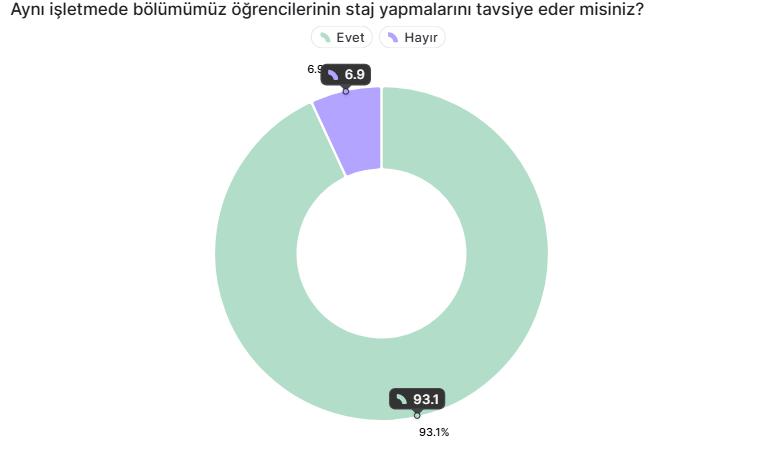
The majority of students participating in the survey (93.1%) stated that they would recommend the organization where they completed their internship to other students in the Department, while 6.9% would not recommend it. This high recommendation rate indicates that the experiences and working environments offered by the organizations were generally viewed positively.
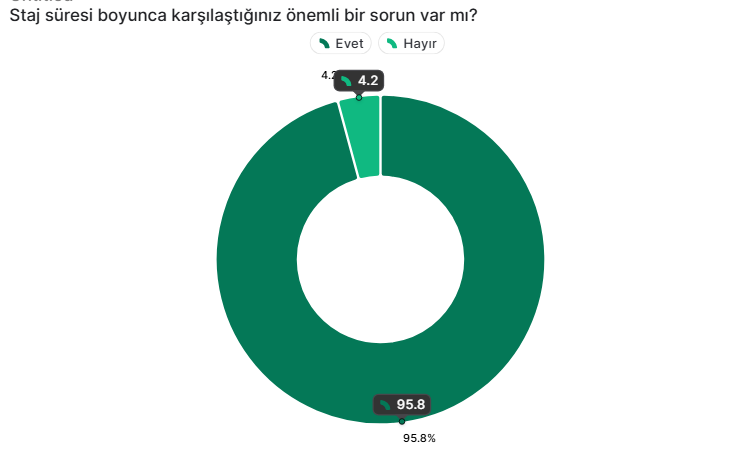
The majority of students participating in the survey (95.8%) stated that they did not encounter any significant problems during the internship period. This positive result indicates that the host organizations generally provided a supportive environment responsive to students’ needs. However, a very small proportion of students (4.2%) reported experiencing a significant problem during the internship.
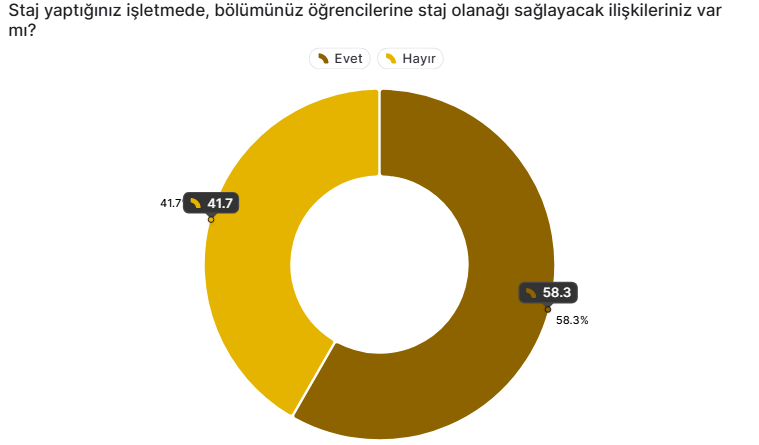
Approximately 58.3% of the students participating in the survey stated that they had contacts within the organization that could provide internship opportunities for other students in the Department, while approximately 41.7% stated that they did not have such contacts.
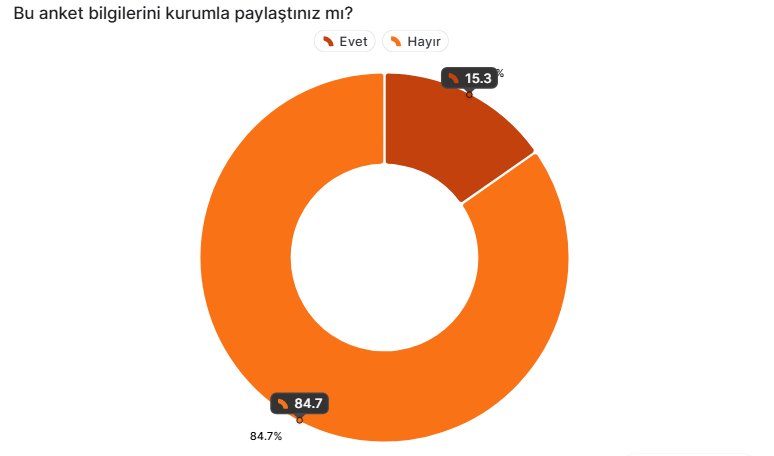
The majority of students participating in the survey (84.7%) stated that they did not share their opinions and evaluations regarding the internship process with the host organization. In contrast, only 15.3% shared the survey findings with the organization.
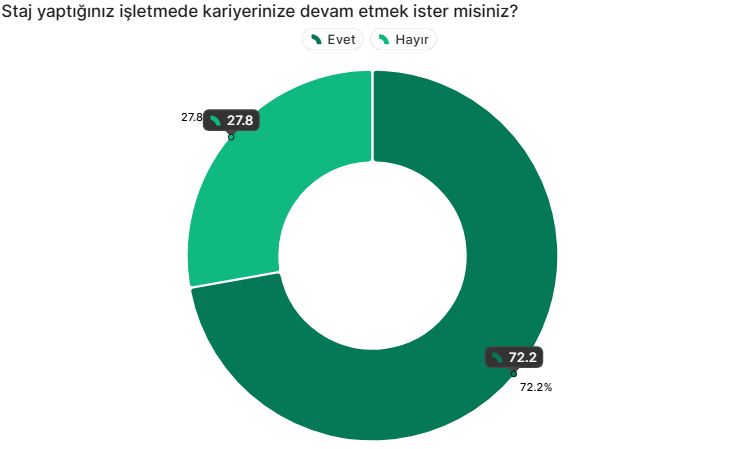
Approximately 72.2% of the students participating in the survey stated that they would like to continue their careers at the organization where they completed their internship. This rate indicates that the working environment and professional development opportunities provided by the organizations were generally viewed positively. On the other hand, approximately 27.8% stated that they would not like to pursue a career at the same organization.
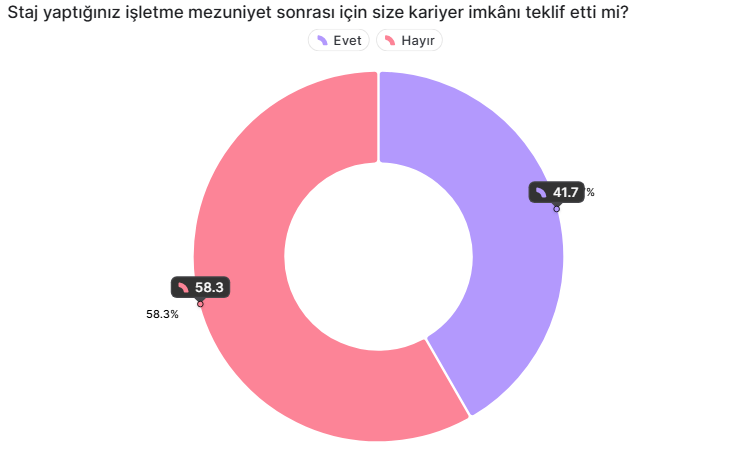
Approximately 58.3% of the students participating in the survey stated that they received an offer for a post-graduation career opportunity from the organization where they completed their internship, while 41.7% stated that they did not receive such an offer. This result shows that some organizations play an active role in integrating interns into future employment.
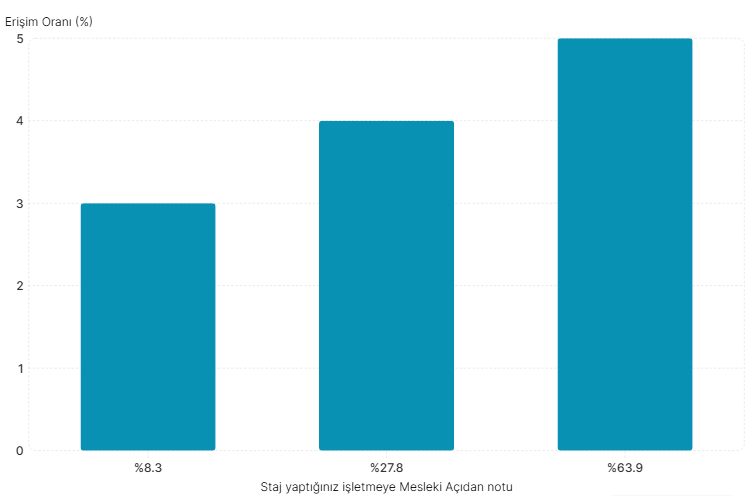
The professional ratings given by the students to the organizations where they completed their internships were generally high. A total of 63.9% gave a score of 5, 27.8% gave a score of 4, and 8.3% gave a score of 3. The ratings were concentrated mainly between 4 and 5, indicating that the organizations had adequate professional resources and provided students with a high-quality working environment.
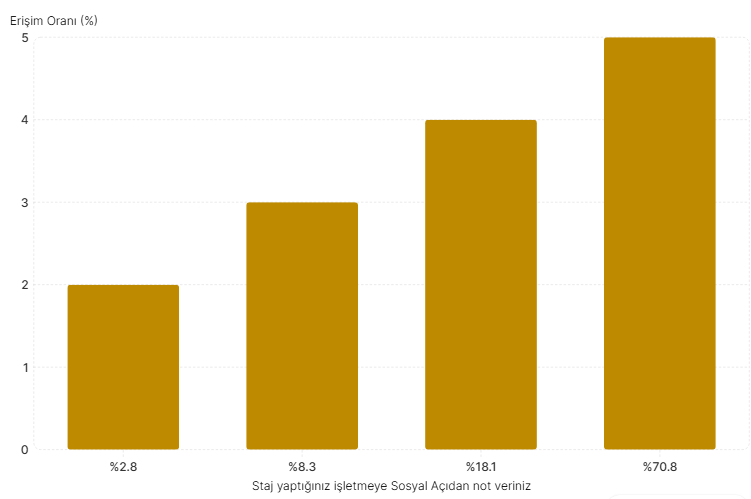
The social ratings given by the students to the organizations where they completed their internships were also generally high. Of the participants, 70.8% gave a score of 5, 18.1% gave a score of 4, 8.3% gave a score of 3, and 2.8% gave a score of 2. The concentration of ratings largely within the 4–5 range shows that the host organizations offered students a positive experience in terms of the social environment, relationships with colleagues, and the overall working atmosphere. On the other hand, the lower ratings indicate that some organizations may have had shortcomings in their social environment or may not have fully met students’ expectations.
The survey conducted on our Department students’ internship experiences provides important information regarding both students’ individual development and the quality of the organizations where the internships were completed. The findings show that the vast majority of students evaluated their internships positively overall. Students’ individual assessments of the internship process were generally favorable, and the internship was found to contribute to setting professional goals, time management, planned working habits, adaptation to a disciplined work environment, increased willingness to learn, recognition of areas for improvement, taking responsibility, communication skills, and teamwork. These high scores indicate that internships made a significant contribution to students’ professional and personal development. In addition, the open-ended responses concerning the insufficient duration of the internship suggest that students need longer and more comprehensive applied education processes. Regarding the organizational evaluations, the majority of students found their internship placements through their own means and stated that they received continuous support and guidance at the organizations where they completed their internships. The high professional and social ratings support the conclusion that the organizations were generally adequate in terms of professional resources and social environment and offered students positive working conditions. Furthermore, a significant proportion of students were able to meet their expectations from the internship, and the desire to pursue a career at the same organization was found to be high. In conclusion, internship programmes make an important contribution to students’ professional development and their ability to meet sectoral expectations. Nevertheless, measures such as extending the internship period, strengthening communication between students and organizations, and involving sectoral stakeholders in the programme would further improve the effectiveness of the programme and enhance students’ experiences.